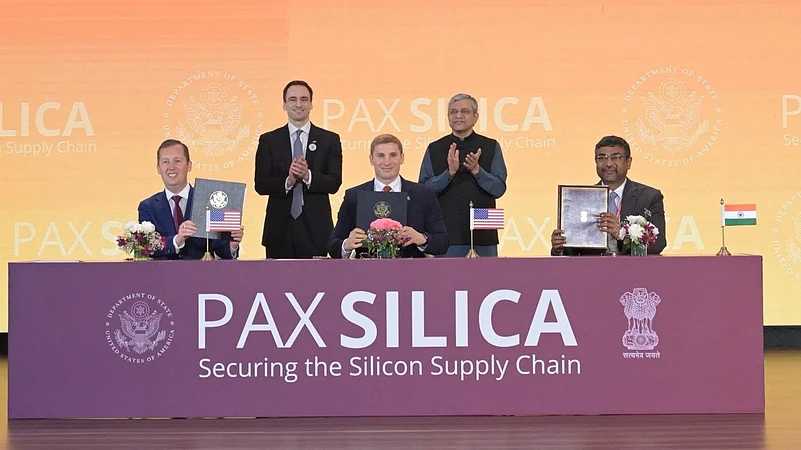


India joined US-led Pax Silica bloc focused on secure supply chains for critical minerals and AI technologies.
Move aligns with ongoing ITA and BTA talks, signalling deeper US-India economic and strategic cooperation.
Membership could accelerate India’s semiconductor push, AI ecosystem growth, and 2047 development goals.
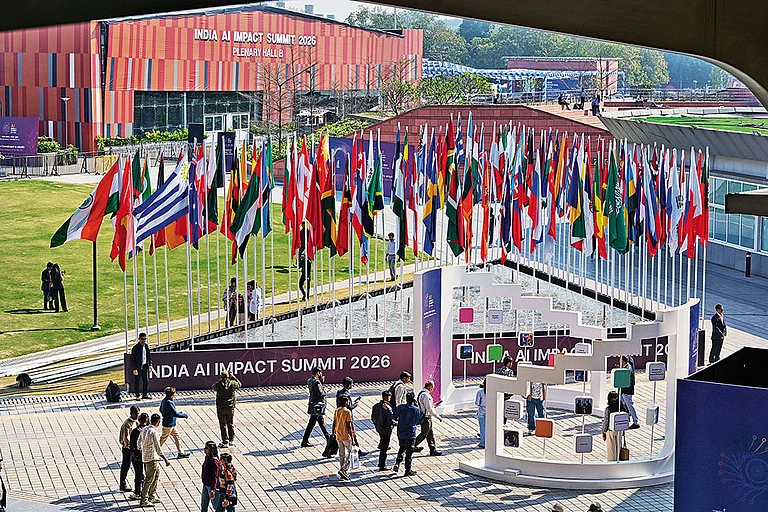
New Delhi formally joined the US-led tech bloc, Pax Silica, a strategic alliance aimed at strengthening secure supply chains and advancing artificial intelligence cooperation. The tech alliance was announced at the Global AI Impact Summit on Friday.
The move comes amid ongoing efforts by India and the United States to finalise a proposed Interim Trade Agreement (ITA) and advance negotiations on a broader Bilateral Trade Agreement (BTA), in a bid to deepen economic ties between two of the world’s largest economies.

1 April 2026
Get the latest issue of Outlook Business

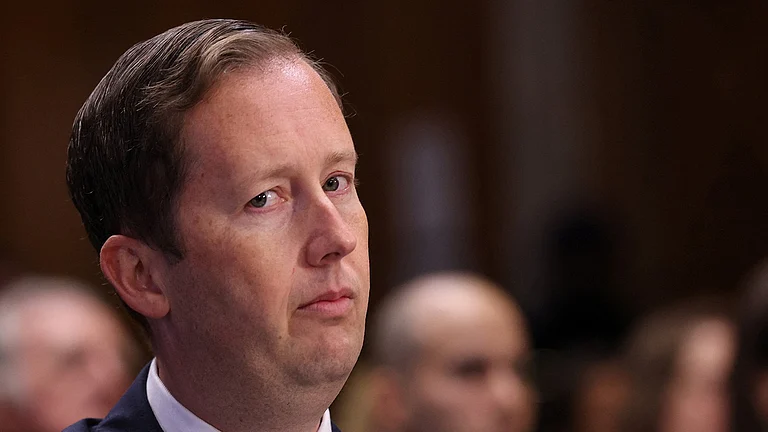
US Under Secretary of State for Economic Growth, Energy, and the Environment Jacob Helberg travelled to India for a two-day visit beginning Friday to participate in the India AI Impact Summit, which concludes on Saturday.
The US delegation is being led by Michael Kratsios, Director of the White House Office of Science and Technology Policy. The formal signing ceremony is expected to be followed by a brief media interaction featuring US Ambassador to India Eric Garcetti alongside Helberg and other senior officials.
What is Pax Silica?
Pax Silica is a flagship initiative of the US Department of State designed to build secure, resilient, and innovation-driven supply chains for critical minerals and artificial intelligence (AI) technologies. The alliance reflects Washington’s growing focus on technological sovereignty and supply chain security amid shifting global geopolitical dynamics.
The Pax Silica Declaration underscores the importance of reliable supply chains as indispensable to mutual economic security. It also recognises AI as a transformative force that will shape global competitiveness, economic resilience, and long-term prosperity in the coming decades.
By fostering cooperation in semiconductor manufacturing, rare earth processing, advanced computing infrastructure, and AI governance frameworks, the bloc seeks to reduce vulnerabilities arising from overdependence on single-country supply chains.

Who Are the Current Members?
Current members of Pax Silica include major global powers such as the United States, Japan, and South Korea, along with Singapore, the United Kingdom, the United Arab Emirates, Qatar, and Greece. The grouping is aimed at deepening economic and technological coordination among aligned nations while reducing dependence on non-aligned or geopolitically sensitive supply sources.
The Declaration lays out a shared commitment to deep economic and technological cooperation across supply chains. “We recognise that a reliable supply chain is indispensable to our mutual economic security,” the Pax Silica Declaration states.
In an interview with CNBC, Helberg clarified the strategic intent behind the initiative. “Pax Silica is really not about China; it is about America. We want to secure our supply chains,” he said. “We view India as a key partner to help de-risk and diversify those supply chains.”
The China Factor
Pax Silica was formed as a direct response to China's near-monopoly in critical minerals. Globally, China holds almost 90% of critical mineral supply. With ongoing tussle and tariff policy flip flops with Washington, Beijing has tightened its grip on critical minerals and rare earth exports, disurpting the global chain.
India was heavily dependent imported Chinese rare earth elements, critical for electric vehicles. Indian automakers had to cut productuib and drop features owing to limited supply of the rare earth minerals.
Even globaly, China's tightened grip chocked the rare earth needs, triggering a scramble for diverse suppliers. The Pax Silica comes into this context with aims to reduce these dependencies by forming tech alliance with trusted partners including Australia, Netherlands, South Korea for utilising their field of expertise.
Essentially, Pax Silica is a response to growing demand among global partners to strentghen cooperation with the US in emerging technologies mitiagate such supply-side disruptions due to over reliance.
How Will Membership Impact India?
India was not part of the alliance when it was initially created and consisted mostly of high income nations and US treaty allies. India’s accession to Pax Silica is expected to significantly strengthen its position in global technology and supply chain ecosystems.
New Delhi's decision to join the agreement quickly follows after its participation in the Critical Minerals Ministerial convened by US Secretary of State Marco Rubio earlier this month, alongside External Affairs Minister S Jaishankar.
Jaishankar expressed India's support for the Forum on Resource, Geostrategic Engagement (FORGE), an initiative that succeeds the US-led Mineral Security Partnership. He also urged for structured international cooperation to 'de-risk' critical mineral supply chains, highlighting the vulnerabilities in 'excessive concentration' in the global world.
India holds approximately 8.52 million tonnes of rare earth reserves thought domestic production remains below potential. Joining the tech alliance will help India gain faster access to process know-how, advanced manufacturing equipment, and GPU infrastructure.
With its large and skilled talent pool, expanding semiconductor ambitions, growing digital infrastructure, and strategic geographic location, India brings considerable value to the alliance.
Membership could accelerate India’s semiconductor manufacturing plans, boost collaboration in critical mineral processing, and enhance its footprint in AI research, development, and deployment.
One Step Closer to Atmanirbharta
It also aligns with India’s long-term economic vision for 2047, which seeks to transform the country into a developed economy with strong technological self-reliance.
On the bilateral front, India’s participation in Pax Silica may further solidify US-India strategic ties, particularly in emerging technologies, advanced manufacturing, and critical infrastructure development.
As global competition over technology and supply chains intensifies, India’s inclusion in the bloc signals its growing importance in shaping the next phase of economic and technological cooperation. After singing the membership, Union Minister of Information and Technology Ashwini Vaishnaw said The world trusts India.' Pax Silica is, in part, a bet on exactly that.'