Willie Walsh will take over IndiGo in August, while Air India is also set to name a new CEO.
IndiGo’s Pieter Elbers and Air India’s Campbell Wilson, who joined in 2022, have both stepped down in 2026.
The leadership change comes as industry is currently under pressure from cash burn, route disruptions and delayed aircraft deliveries.
Willie Walsh steps into IndiGo in August. Air India, too, will soon announce a new CEO. Between them, the incoming leaders will run airlines that together control nearly 90% of India’s civil aviation market, at a time when the industry is burning cash, flying longer routes around closed airspaces, and waiting for aircraft that have yet to arrive.
The outgoing CEOs, IndiGo’s Pieter Elbers and Air India’s Campbell Wilson, arrived within a week of each other in May 2022, both hired to execute ambitious transformations. They both resigned within a month of each other in 2026, after navigating a fatal crash, regulatory pressure, airspace disruptions, and fuel price shocks. While the market was growing, converting that growth into profit proved far more difficult.

1 April 2026
Get the latest issue of Outlook Business

The leaders coming in will inherit the same fundamentals: high fuel taxes, a weak rupee, grounded aircraft, and longer, costlier routes. The only thing that changes on day one is the name on the door.
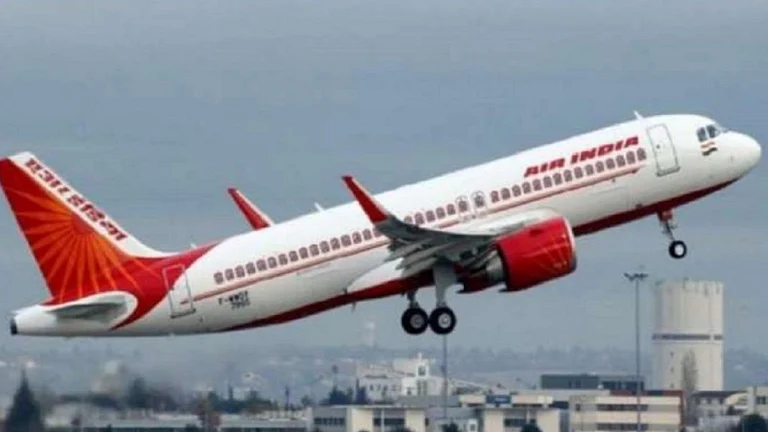
“Indian airlines have been flying into this wall for years: high fuel taxes, a weak rupee, and dollar-denominated obligations,” says Pragya Priyadarshini, Managing Director at Primus Partners. She adds that each of the exiting leaders was brought in to execute an ambitious transformation, but their job descriptions changed dramatically mid-tenure.
Wilson, she says, was hired to modernise a legacy airline, not to navigate a fatal crash, a prolonged airspace closure, and a West Asia fuel shock all at once. Likewise, Elbers was meant to build IndiGo into a global carrier, not to manage the fallout from a regulatory rule (new pilot fatigue management norms) the airline had a year’s notice to prepare for.
Priyadarshini notes that incoming leaders will be tasked with fixing the same fundamentals “cost architecture, fleet gaps, safety culture” while dealing with external shocks beyond their control.
IndiGo remains under tight regulatory watch after a massive flight disruption, which led to 4,500 flights being affected over the first ten days of December 2025 and impacted over 10 lakh passengers. Willie Walsh, who will take over in August, will first need to rebuild passenger trust while expanding fleet capacity amid persistent global supply chain constraints.
At Air India, the incoming CEO inherits an airline in the middle of transformation on multiple fronts, fleet modernisation, integration, and even the Ahmedabad crash investigation, with losses in FY26 expected to be the “widest ever annually”.
It wasn’t the situation when these executives joined the airlines. At the time, the Indian civil aviation sector was preparing to recover from the Covid-19 pandemic, which had caused a drop in traffic. The companies were hopeful for a swift recovery and expected better growth as the Indian government pushed infrastructure spending and incentives for the sector.
In his welcome remarks, Tata Sons chairman N Chandrasekaran had said Campbell Wilson was hired to build a “world-class airline” from a newly privatised carrier. Similarly, when Pieter Elbers took charge, he spoke of leading IndiGo into its next phase of growth.
But soon after their induction, their ambitions collided with reality. Supply chain delays slowed aircraft deliveries, geopolitical tensions disrupted routes, and operational challenges mounted.
At IndiGo, a major flashpoint came with the airline’s inadequate preparation for the revised Flight Duty Time Limitations (FDTL), which came into force on November 1, 2025. The airline failed to align staffing and rostering with the new safety norms, even as it rolled out a winter schedule that was not viable under the updated rules.
Once the norms took effect, operations unravelled quickly. Over about 10 days, the airline cancelled between 4,500 and 5,500 flights, while on-time performance collapsed to nearly 4%. The disruption left passengers stranded and exposed serious gaps in operational planning. The regulator concluded that the root cause lay in the airline’s failure to make adequate arrangements to comply with the revised FDTL framework, particularly in manpower planning, crew rostering, and overall preparedness.
While the airline and CEO Elbers continued to assure stakeholders that the situation was under control, the scale of disruption told a different story.
The fallout extended beyond the airline. The Directorate General of Civil Aviation removed four flight operations inspectors responsible for overseeing compliance, citing their failure to flag emerging risks in time. Within the airline, changes followed: Jason Herter, who led the operations control centre, exited in February.
After a detailed probe ordered by the Ministry of Civil Aviation, the airline was slapped with ₹22.2 crore in penalties and ordered by the DGCA to submit a ₹50 crore bank guarantee, along with capacity cuts, and was placed under enhanced surveillance. The order also included a note for CEO Elbers, personally blaming him for “inadequate overall oversight of flight operations and crisis management.”
At Air India, the Ahmedabad crash dealt a severe blow to management credibility, but it was not an isolated concern. A series of incidents before and after the crash suggested that the airline’s operational systems were still under stress following its acquisition by the Tata Group in January 2022.
Regulatory disclosures indicate that a large proportion of the airline’s fleet inspections since early 2025 flagged recurring technical issues. These ranged from delays in critical safety checks, such as cabin pressurisation, to inconsistencies in recording long-haul operational data. Both Indian and European regulators intensified oversight as a result.
Since 2022, the airline has reported multiple in-flight technical events, including engine shutdowns, pressure issues, and aborted take-offs. By January 2026, its technical incident rate had risen sharply, roughly four times higher than levels seen in late 2024. The situation worsened after a February 2026 report that an aircraft flew eight times without certification and without checks on emergency equipment before operations.
“These aren’t minor administrative slippages, they are the kind of findings that follow a CEO personally, not just institutionally. What’s changed in India’s regulatory environment is significant: the DGCA has moved from penalising airlines as entities to naming and warning individuals at the top,” said Priyadarshini.
She added that while regulatory pressure alone did not force these CEOs out, “to say it had nothing to do with it would not be right.”

Series of unfortunate events
Since last year, airlines have faced multiple issues that have added to operational costs. After the Pahalgam terror attack on April 22, 2025, followed by cross-border air strikes between India and Pakistan, the latter closed its airspace to Indian airlines. According to Primus Partners, this is costing Indian airlines around ₹7,000 crore annually to fly via alternate routes, with Air India bearing the biggest hit at ₹5,000 crore and IndiGo at ₹1,300 crore.
“Every North America-bound flight now costs roughly ₹29 lakh more per trip, and every Europe-bound flight ₹23 lakh more, just from the longer rerouting,” she said.
Meanwhile, the West Asia conflict drove crude prices from $72 to $105 a barrel. For the aviation industry, fuel costs account for around 30–40% of total operating expenses. An analysis by ICRA showed that Aviation Turbine Fuel (ATF) prices have been highly volatile through 2025 and early 2026, fluctuating month to month before the recent surge.
As of March 1, 2026, prices were up 1.7% year-on-year, with a sharp spike later in March as crude oil jumped to $105 per barrel due to the West Asia conflict.
Further, the weakening of the Indian rupee against the US dollar has resulted in large foreign exchange losses. The rupee has depreciated from around 74 per dollar to 93 in April 2025 — a decline of about 12% since 2022.
According to ICRA, Indian aviation is expected to report losses of around ₹17,000–18,000 crore in FY26, primarily driven by IndiGo’s higher costs due to flight disruptions, refunds, and operational issues in December 2025, along with foreign exchange losses.
“For FY27, losses were earlier expected to narrow to ₹11,000–12,000 crore, supported by traffic growth. However, the West Asia conflict since late February 2026, leading to cancellations, rerouting, higher fuel burn, and rising costs, now poses a downside risk,” the agency said.
For Air India and IndiGo individually, losses are expected to remain significant. Air India’s losses are projected to reach ₹20,000 crore, compared to ₹11,000 crore in FY25. For IndiGo, which turned profitable under Elbers, Avendus Spark Research estimates FY26 profit after tax could decline by about 25% year-on-year to ₹5,104 crore from ₹7,253.2 crore in FY25.
The fall was evident in its Q3 FY26 results, where it reported a nearly 78% year-on-year decline in net profit to ₹550 crore.

Fleet dreams, delivery delays
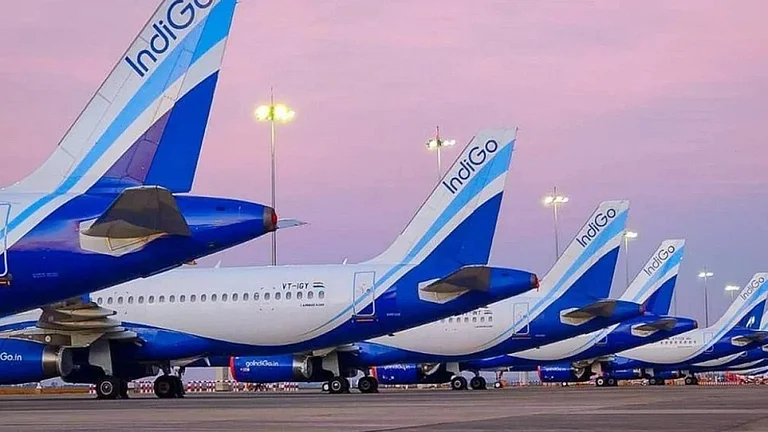
These financial pressures are compounded by supply chain bottlenecks in aircraft deliveries. IndiGo has a fleet of around 440 aircraft, while the Air India Group, including Air India Express and Vistara, operates around 290 planes. Both airlines placed multi-billion-dollar orders with Boeing and Airbus soon after their new leadership took charge.
In February 2023, Air India placed a massive 470-aircraft order, 250 from Airbus and 220 from Boeing. A few months later, IndiGo announced a 500-aircraft Airbus deal at the Paris Air Show.
But reality shifted soon after. One of their key competitors, Go First, filed for voluntary bankruptcy and suspended operations on May 2, 2023. The airline, which held about 10% market share, was hit by mass aircraft groundings due to engine failures, triggering severe cash shortages.
This also exposed global supply chain constraints in aircraft manufacturing, dominated by Boeing and Airbus, both grappling with their own challenges, including safety concerns and labour disruptions.
“Of the 570 aircraft ordered in 2023, only about 40 had been delivered by December 2024. That shortfall explains a lot, why long-haul routes were suspended and why Pakistan airspace rerouting was so punishing,” says Priyadarshini.
She adds that more than 800 PW1000G-powered jets were grounded globally by late 2025, with Airbus reportedly seeking damages from Pratt & Whitney for engine delays affecting deliveries.
“More than 100 aircraft — about 13–15% of India’s operational fleet — are currently grounded, largely due to Pratt & Whitney engine issues and supply chain failures. The core problem is a manufacturing defect in turbine components built between 2015 and 2021,” she explains.
As airlines struggled with delayed fleet expansion, planning became more difficult, says Shantanu Gangakhedkar, Principal Consultant and aviation lead at Frost & Sullivan.
“Airlines often plan to phase out older aircraft, which are less fuel-efficient and costlier to maintain. But with delayed deliveries, they are forced to keep older planes in service, increasing operating costs,” he said.
Same problems, new faces
As new leaders step in, the challenges remain daunting and largely unchanged. For IndiGo, the immediate priorities include restoring operational reliability, rebuilding customer trust, and navigating regulatory scrutiny, while continuing international expansion despite fleet constraints.
For Air India, the task is even more complex: completing a multi-year transformation while managing losses, integrating operations, and addressing safety concerns.
Gangakhedkar says, “CEOs will face multiple challenges, rising costs, market volatility, workforce shortages, supply chain disruptions, and aircraft delivery delays. Their test will be to identify growth opportunities, minimise inefficiencies in the short term, and drive revenue over the medium term.”
Nitin Sarin, Managing Partner at Namibia-based law firm Sarin & Co, echoes this concern.
“This isn’t like a CEO stepping into an airline such as Emirates, where the mandate is to showcase a world-class product. In India, airline leaders deal with pressure from every direction, government policies, high taxation, and complex passenger dynamics,” he said, adding that much of the role becomes constant damage control.
“Only after navigating these hurdles can they focus on product, growth, and service quality,” he said.
Walsh and whoever takes Air India's corner office are likely to find out soon enough.